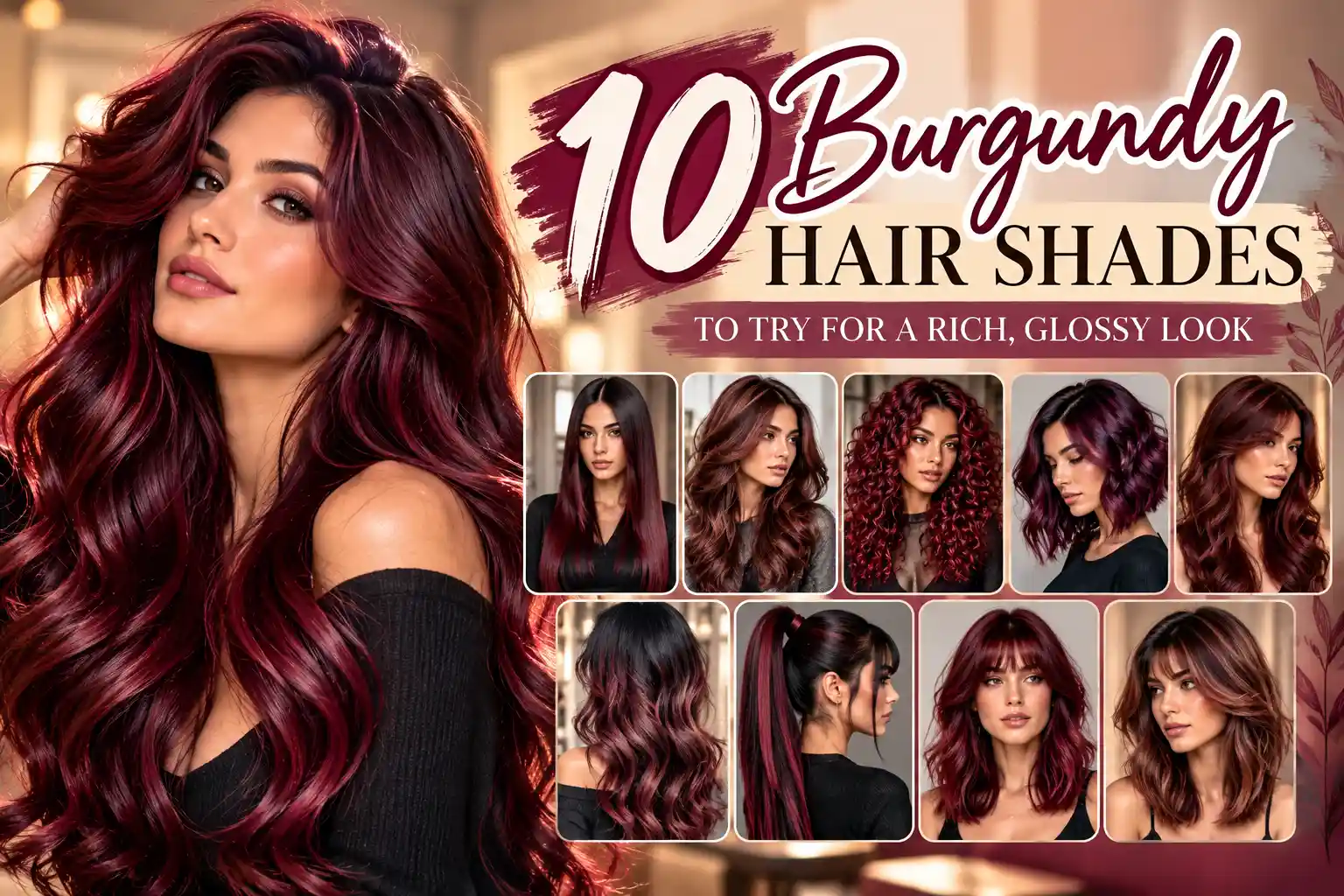
Burgundy hair is a beautiful way to add depth, richness, and a hint of red or violet to your look. From deep wine-inspired colors to soft burgundy brown, this versatile shade family offers plenty of options for women who want something different from traditional brunette or bright red hair.
The best part is that burgundy does not have to look bold or dramatic. You can choose a dark cherry shade that reveals its color in the light, a dimensional balayage that blends into your natural roots, or a vibrant plum tone that makes a stronger statement.
If you are looking for burgundy hair shades that feel sophisticated, modern, and full of dimension, these ten ideas will help you find inspiration for your next salon visit.
1. Classic Deep Burgundy

Classic deep burgundy is a rich blend of red and violet that creates a sophisticated, multidimensional appearance. It sits between dark red and purple, giving the hair a luxurious finish without looking as bright as a vivid red dye.
This shade works beautifully on long waves, layered cuts, sleek straight hair, and textured bobs. The darker base creates depth, while the red-violet tones become more noticeable when the hair catches the light.
For a polished look, pair deep burgundy with soft waves and a glossy finish. If you prefer a more understated result, ask your colorist for a deeper burgundy that stays close to your natural brunette shade.
Styling tip: Use a lightweight shine serum on the mid-lengths and ends to emphasize the richness of the color without weighing down your hair.
2. Black Cherry Burgundy

Black cherry burgundy combines an almost-black brunette base with deep cherry-red and violet undertones. It is an excellent option for anyone who loves dark hair but wants a little more color and dimension.
At first glance, black cherry hair can look very dark. Under sunlight or brighter indoor lighting, however, its red reflections become more visible. This subtle change in appearance gives the shade a distinctive finish.
Black cherry burgundy looks particularly striking on long, glossy hair, blunt bobs, and soft curls. It also offers a useful reference for brunettes who want to explore red-toned hair without immediately choosing a bright shade.
Keep in mind that the final result depends on your starting color and the formula used. Previously colored or very dark hair may require a different approach from untreated hair.
Styling tip: Try a sleek blowout or loose, polished waves to show how the cherry tones reflect light along the hair.
3. Cherry Cola Brunette
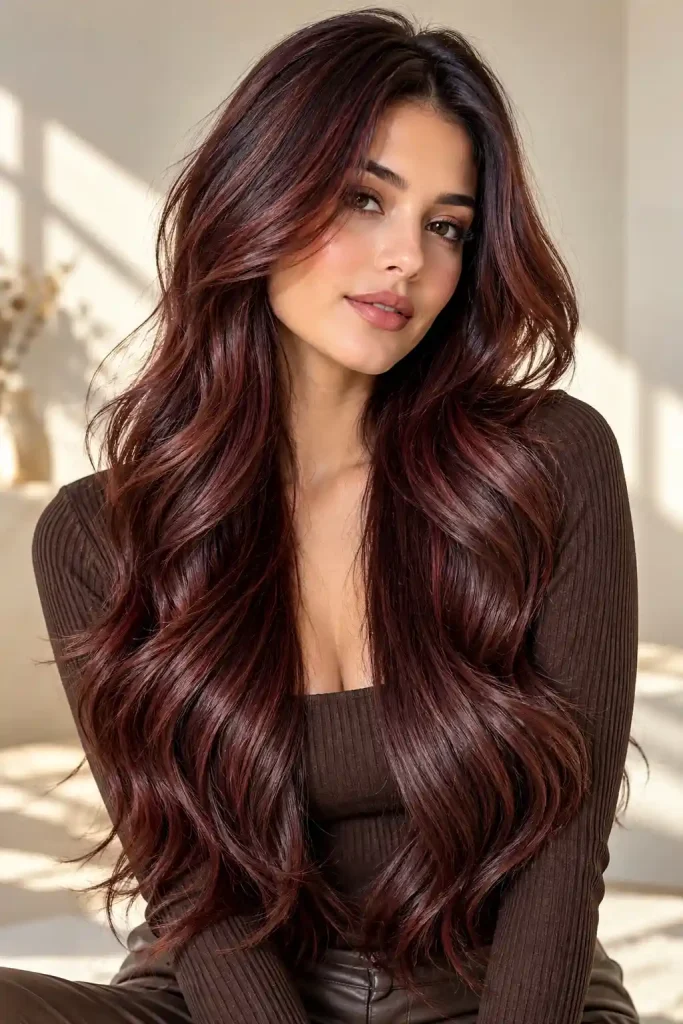
Cherry cola brunette blends dark brown hair with warm cherry-red undertones. Instead of looking like a uniform burgundy color, it creates a brunette finish with subtle red dimension.
This shade is a particularly interesting choice for anyone exploring current red-brown hair inspiration. It offers a balance between natural-looking brunette depth and a noticeable hint of red.
Cherry cola brunette can work with a range of hair lengths, including shoulder-length cuts, long layers, and textured waves. The contrast between the brown base and cherry reflections gives the hair movement without relying on several contrasting colors.
If you prefer a subtle transformation, ask your colorist for a deep brunette base with restrained cherry tones. For a more noticeable result, discuss a richer red-brown formula that creates stronger color reflections.
Styling tip: Soft waves help reveal the variation between the darker base and red undertones, especially in natural daylight.
4. Deep Wine Red
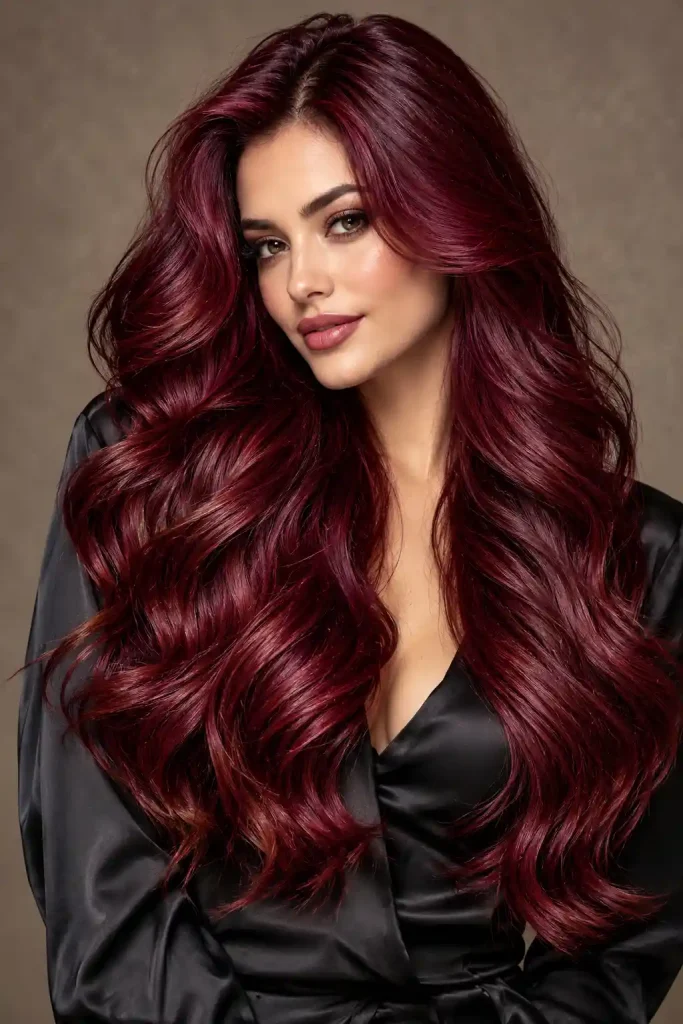
Deep wine red is a saturated shade inspired by the color of red wine. It usually has a stronger red presence than black cherry, although the exact result can vary depending on its violet or brown undertones.
This is a good choice for anyone who wants burgundy hair to be clearly visible rather than appearing almost black. The shade creates a dramatic finish while remaining within the sophisticated red-burgundy family.
Wine red looks beautiful on long, voluminous waves and layered hairstyles. It can also add character to a shoulder-length cut, particularly when the ends are shaped to create movement.
Because vivid red tones can gradually lose their intensity, maintenance should be part of your decision. Ask your stylist how the color is expected to fade and whether a color-refresh appointment or gloss treatment may be appropriate.
Styling tip: Pair wine-red hair with a simple hairstyle and a clean outfit palette so the rich color remains the main visual feature.
5. Plum Burgundy
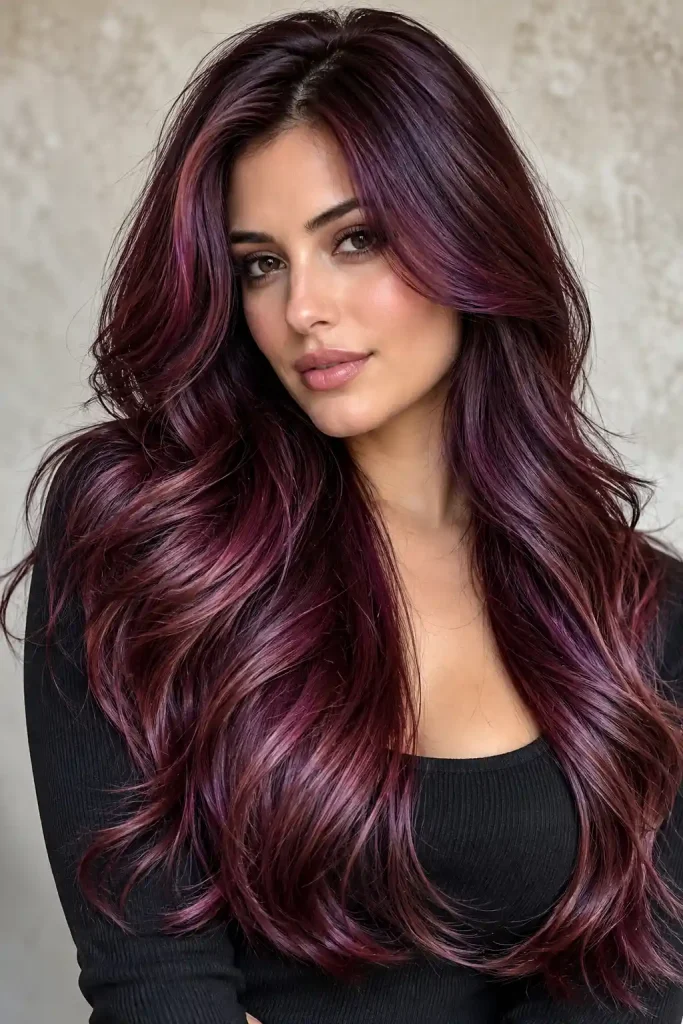
Plum burgundy combines burgundy red with noticeable purple undertones. Compared with classic deep burgundy, it often appears cooler and more violet, making it a distinctive option for anyone who prefers a less traditional red.
The shade can range from dark plum with subtle burgundy reflections to a more saturated purple-red finish. Your chosen formula and starting hair color will influence how strongly the violet tones appear.
Plum burgundy works well with long layers, defined curls, and sleek hairstyles. It can also create an interesting contrast with dark brunette roots when the color is blended rather than applied uniformly.
If you are unsure whether to choose red or purple undertones, bring reference photographs to your stylist. Images taken in different lighting conditions can help you compare how warm and cool versions of burgundy look.
Styling tip: Use soft curls or loose waves to show the color variation across different sections of the hair.
6. Mahogany Burgundy

Mahogany burgundy is a warmer interpretation of burgundy that combines red-brown depth with rich reddish undertones. It is less purple than many plum-inspired shades and often has a more natural-looking brunette appearance.
This makes it a useful option for someone who wants to experiment with burgundy without moving too far from a traditional brown hair color.
Mahogany burgundy looks attractive on layered hair, long bobs, and medium-length styles. Its warm character can also create a beautiful effect when the hair is styled with a smooth blowout or soft bends.
When choosing this shade, discuss the balance between brown and red with your colorist. A browner formula will look more understated, while a stronger red component will make the burgundy character more noticeable.
Styling tip: A smooth, polished finish emphasizes the warm red-brown tones and gives the hair a healthy-looking shine.
7. Burgundy Balayage on Dark Brown Hair
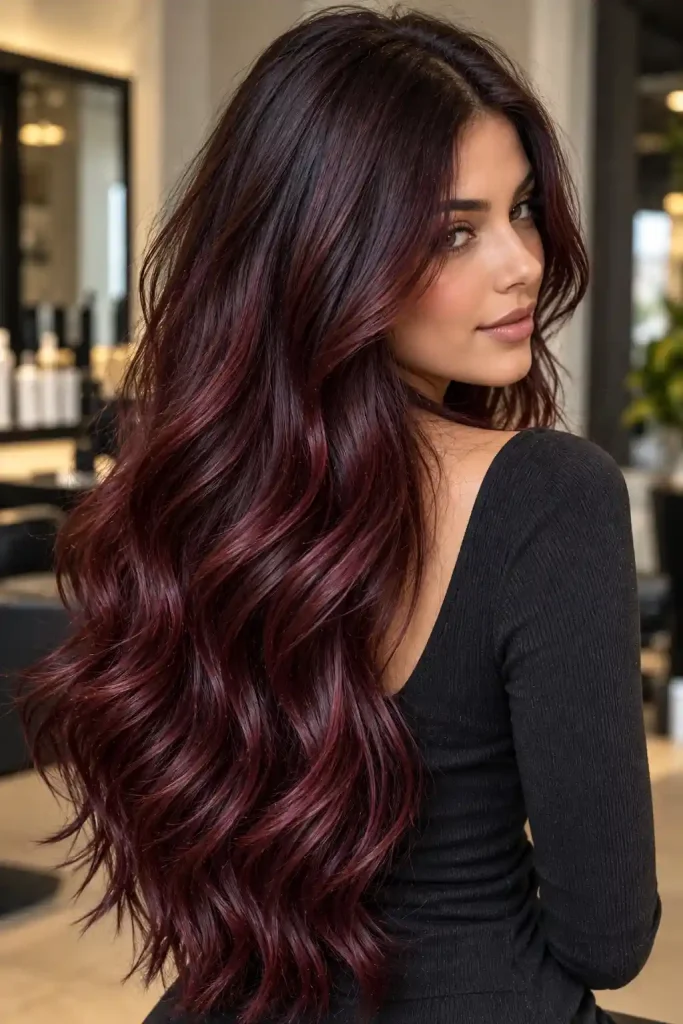
Burgundy balayage is an excellent choice if you want dimension without committing to a uniform burgundy color from root to tip.
This technique places burgundy tones through selected sections of the hair, creating a blended effect against the darker brown base. The result can be subtle and natural-looking or more noticeable, depending on the placement and intensity of the color.
Long layers and loose waves are particularly effective for showing the variation between the brunette base and burgundy pieces. The color can also be adapted to shorter hairstyles when the placement is planned carefully.
One advantage of choosing a balayage-inspired look is that the roots can remain closer to your natural color. However, the maintenance required still depends on the technique, contrast, and condition of your hair.
Ask your stylist where the burgundy should begin, how visible you want it to be, and whether your existing hair color needs preparation before the service.
Styling tip: Choose loose waves to reveal the blended color placement and make the different tones easier to see.
8. Burgundy Highlights on Black Hair

Burgundy highlights add red-violet accents to a black or very dark brunette base. Rather than changing the overall color of your hair, they introduce small sections of burgundy that become visible as the hair moves.
This option suits people who prefer a more controlled transformation. Fine highlights can create a delicate effect, while wider sections provide more obvious contrast.
The placement makes a significant difference. Highlights around the face can draw attention to the haircut, while color distributed through the lengths can create dimension throughout the hairstyle.
Black hair may require lightening to achieve clearly visible burgundy highlights, depending on the desired result and the color products used. A professional colorist can help determine an approach that takes your hair history and condition into account.
Styling tip: Wear your hair in a half-up style or soft waves to reveal the burgundy sections without hiding the dark base.
9. Mulberry Burgundy

Mulberry burgundy takes inspiration from the deep reddish-purple color of ripe berries. It combines a red base with violet undertones, creating a richer and more colorful appearance than a muted burgundy brown.
This shade is ideal for anyone who wants a distinctive hair color that still belongs to the burgundy family. Depending on the formula, it can look dark and moody or brighter and more visibly purple-red.
Mulberry burgundy pairs well with voluminous curls, long layers, and textured hairstyles. The combination of red and violet tones creates visual interest, especially when the hair has plenty of movement.
Before choosing this shade, consider how much purple you want to see in the final result. A darker, red-dominant formula will look closer to traditional burgundy, while a violet-rich version will create a more noticeable berry effect.
Styling tip: Defined curls or brushed-out waves can reveal the different tones throughout the hair, helping the color look dimensional rather than flat.
10. Soft Burgundy Brown
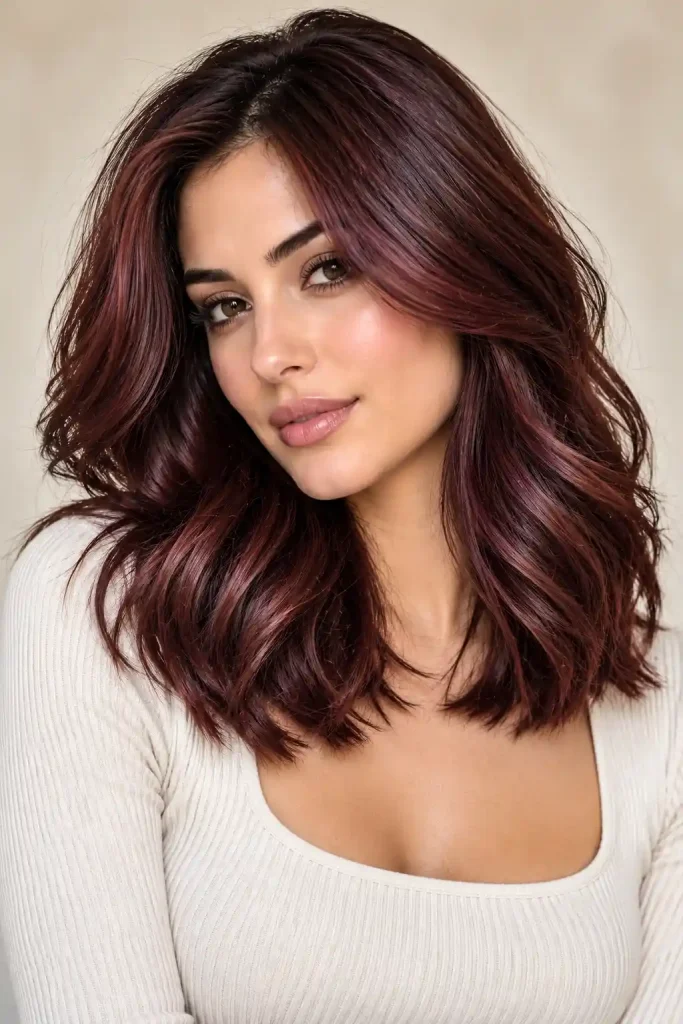
Soft burgundy brown is a subtle option for anyone who likes the idea of burgundy hair but does not want a dramatic color change.
The shade combines brunette depth with a restrained red or burgundy sheen. Depending on the formula, the color may look mostly brown indoors and reveal more reddish tones under brighter lighting.
This makes it a useful starting point for someone exploring burgundy for the first time. It can be adapted to long layers, shoulder-length hair, blunt bobs, and many other cuts.
If you want the color to remain understated, ask your stylist for a brown-dominant formula with soft burgundy undertones. You can also discuss a gloss or other suitable color service if you want to enhance the appearance of your existing shade without pursuing a major transformation.
Styling tip: A natural blowout or relaxed waves complement the understated color and make it suitable for everyday styling.
How to Choose the Right Burgundy Hair Shade
With so many variations available, choosing the right burgundy shade comes down to the appearance you want and the condition of your hair.
Consider Your Starting Hair Color
Your natural hair color and any previous dye treatments affect the result you can achieve.
Dark brown and black hair can provide a deep base for black cherry, dark burgundy, and soft burgundy brown. More visible red or violet tones may require additional color preparation, depending on your starting shade and the product being used.
If your hair has already been colored, tell your stylist about previous treatments. The process for achieving a particular burgundy shade may differ from that used on untreated hair.
Decide Between Red and Violet Undertones
Burgundy includes both warmer and cooler variations.
- Red-dominant shades: Deep wine red and mahogany burgundy.
- Violet-dominant shades: Plum burgundy and mulberry burgundy.
- Deep brunette shades: Black cherry, cherry cola, and soft burgundy brown.
- Dimensional options: Burgundy balayage and burgundy highlights.
Looking at reference photographs in natural light can help you identify the undertones you prefer.
Choose Between All-Over Color and Highlights
An all-over burgundy shade creates a more consistent color result. Balayage and highlights, on the other hand, introduce burgundy into selected sections while preserving some of your natural or existing hair color.
If you are unsure how much color you want, ask your stylist to compare these approaches and explain the maintenance involved with each one.
How to Keep Burgundy Hair Looking Glossy
Burgundy hair can gradually lose its original intensity, particularly when the color contains noticeable red tones. A simple, consistent hair-care routine can help maintain its appearance.
Use suitable shampoo and conditioner. Choose products formulated for colored hair and follow the care instructions recommended by your stylist.
Be mindful of washing frequency. Frequent washing may contribute to color fading. Find a routine that keeps your scalp and hair comfortable while helping preserve the color.
Protect your hair from heat. Use an appropriate heat protectant before styling with hot tools, and avoid unnecessary high temperatures.
Consider a suitable gloss treatment. Your stylist may recommend a gloss or color-refresh service to maintain the tone and improve the appearance of shine.
Keep up with regular trims. Trimming damaged or split ends helps maintain the shape of your hairstyle and gives the lengths a neater appearance.
The right maintenance routine depends on the color formula, hair condition, washing habits, and styling routine. Ask your stylist for recommendations tailored to your hair rather than following a rigid schedule.
Frequently Asked Questions
1. What is the difference between burgundy, maroon, and wine-red hair?
Burgundy generally combines red with violet or purple undertones. Maroon usually leans toward a deeper brown-red appearance, while wine red often emphasizes a saturated red tone inspired by red wine. The names can overlap, and individual color formulas vary.
2. Does burgundy hair show up on naturally black hair?
It can, but the visibility depends on the chosen shade, hair history, and color formula. Dark burgundy may appear subtle, while brighter burgundy tones may require additional preparation to become clearly visible.
3. Which burgundy shade is best for a subtle transformation?
Black cherry burgundy, soft burgundy brown, and subtle burgundy highlights are useful options to discuss with your stylist. They can introduce red-violet tones without requiring an obviously bright, all-over color.
4. Is burgundy hair more red or purple?
It can lean in either direction. Deep wine red and mahogany burgundy emphasize red tones, while plum and mulberry burgundy contain more noticeable violet undertones. Cherry cola and black cherry often balance dark brunette depth with red reflections.
5. Does burgundy hair color fade quickly?
The rate of fading varies with the color formula, hair condition, washing habits, heat exposure, and starting color. Red-toned shades can lose some intensity over time, so ask your stylist what maintenance your chosen formula requires.
6. How can I keep burgundy hair shiny?
Use suitable products for colored hair, limit unnecessary heat styling, apply heat protection, and follow a care routine recommended by your stylist. A suitable gloss treatment may also help refresh the appearance of the color.
7. Can I get burgundy balayage without coloring all my hair?
Yes. Balayage places color selectively through sections of the hair rather than applying it uniformly from roots to ends. Your stylist can adapt the placement and intensity to your preferred level of contrast.
8. What should I ask my hairstylist before going burgundy?
Bring reference images and ask which formula can achieve your desired shade on your current hair color. Discuss whether lightening is needed, how the color may fade, what maintenance it requires, and whether your hair is in suitable condition for the proposed service.
Final Thoughts
Burgundy hair shades offer a wide range of possibilities, from subtle brunette reflections to rich wine-red and plum-inspired colors. The best option is the one that matches your preferred level of contrast, your existing hair color, and the amount of maintenance you are comfortable with.
For a dark, understated look, consider black cherry burgundy or soft burgundy brown. If you want a more visible transformation, deep wine red or mulberry burgundy may be worth discussing with your colorist. Burgundy balayage and highlights offer another route for adding dimension while keeping some of your existing color.
Save your favorite reference images, compare the undertones in natural light, and speak with a qualified colorist before making a major color change.